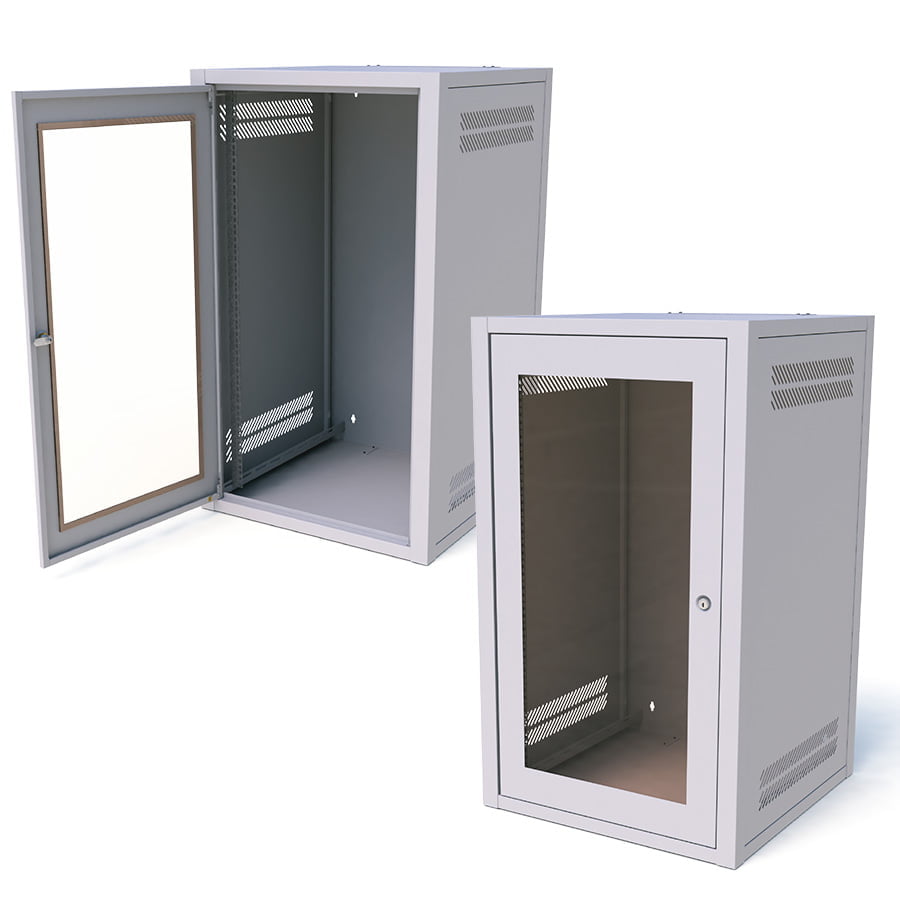
19″ Cabinets, Server Racks & Enclosures
IT Racks for Data Centres & Computer Rooms
Server Racks provide the essential backbone for housing IT infrastructure. These structures are more than just metal boxes. Engineers design them to protect, organise, cool, and manage important IT hardware. This hardware powers everything from small businesses to large global companies.
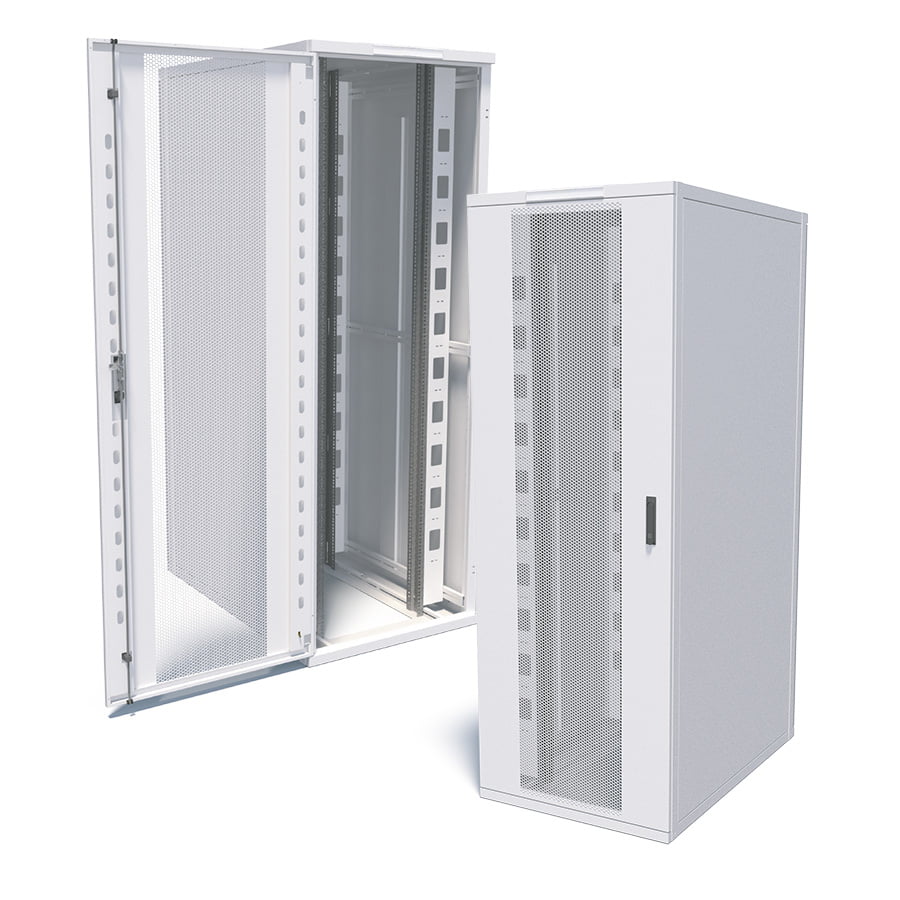
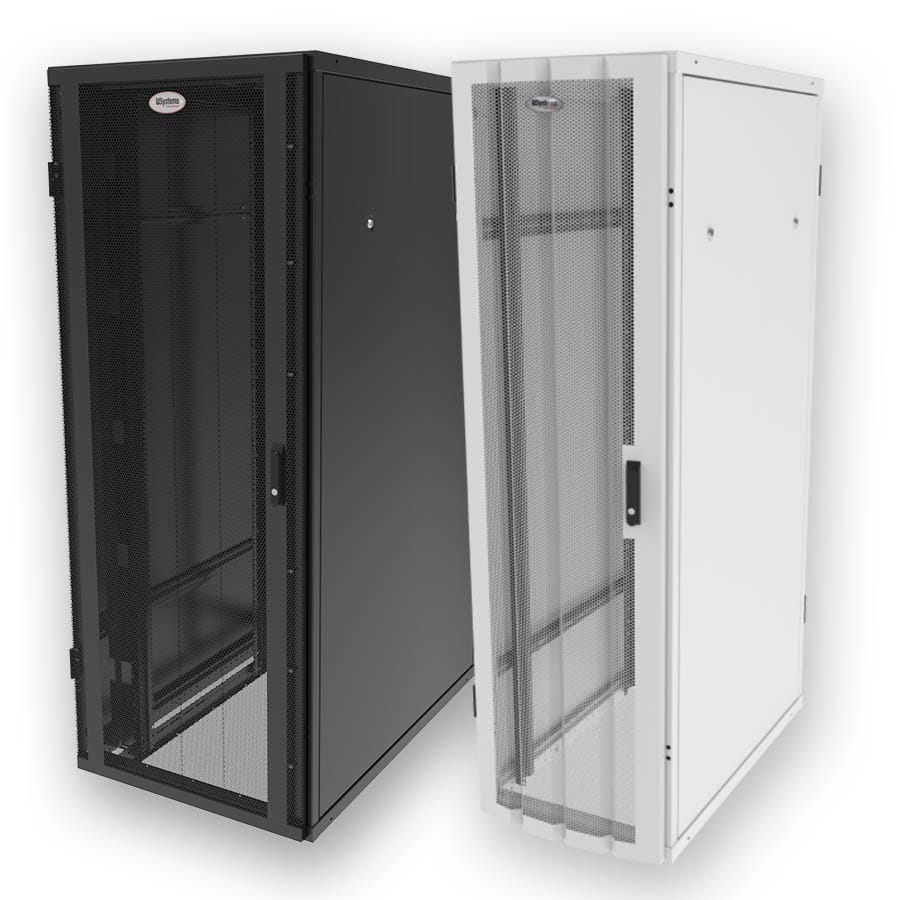
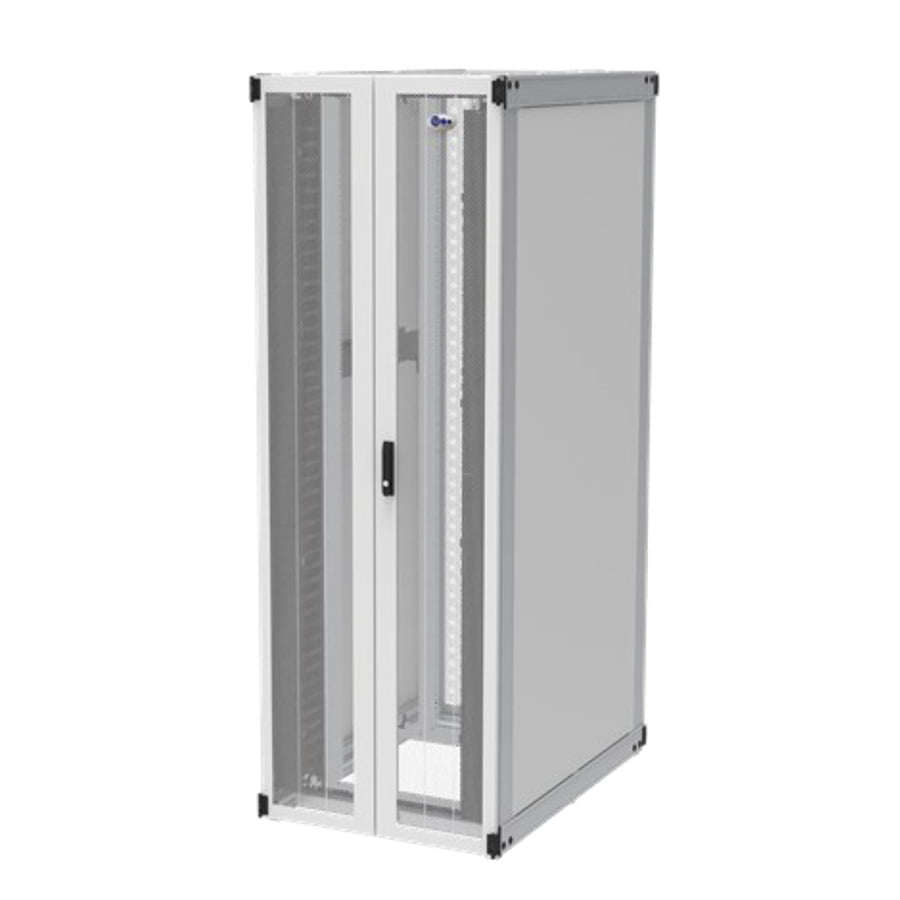
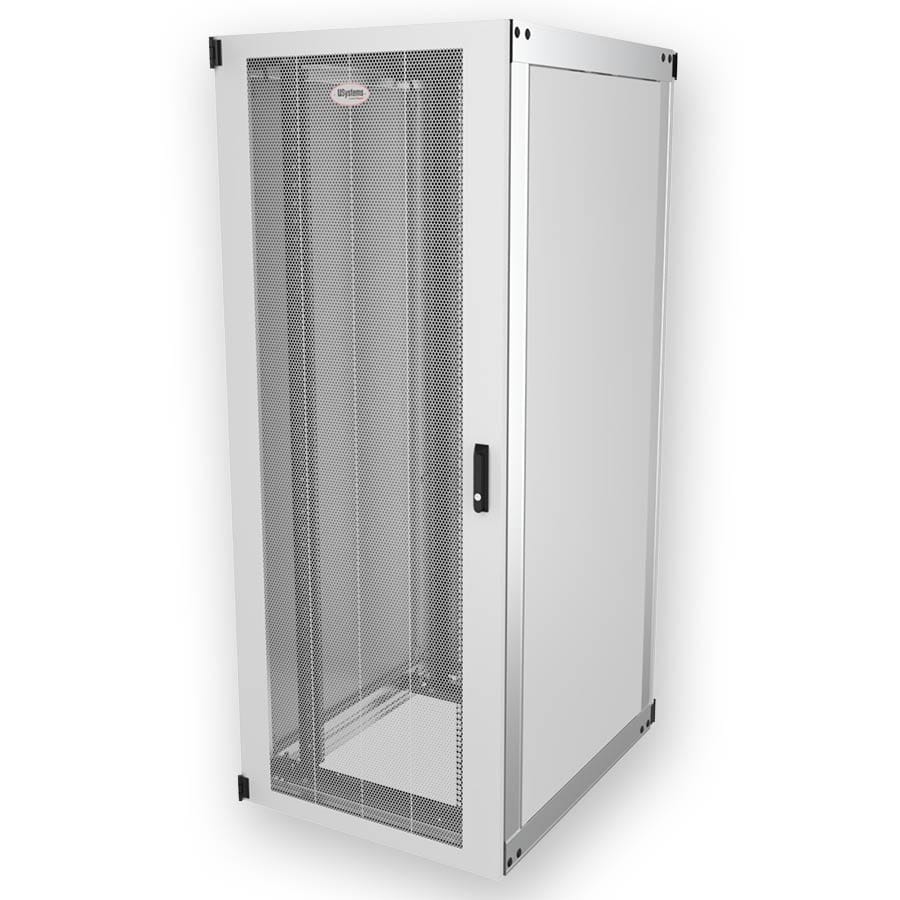
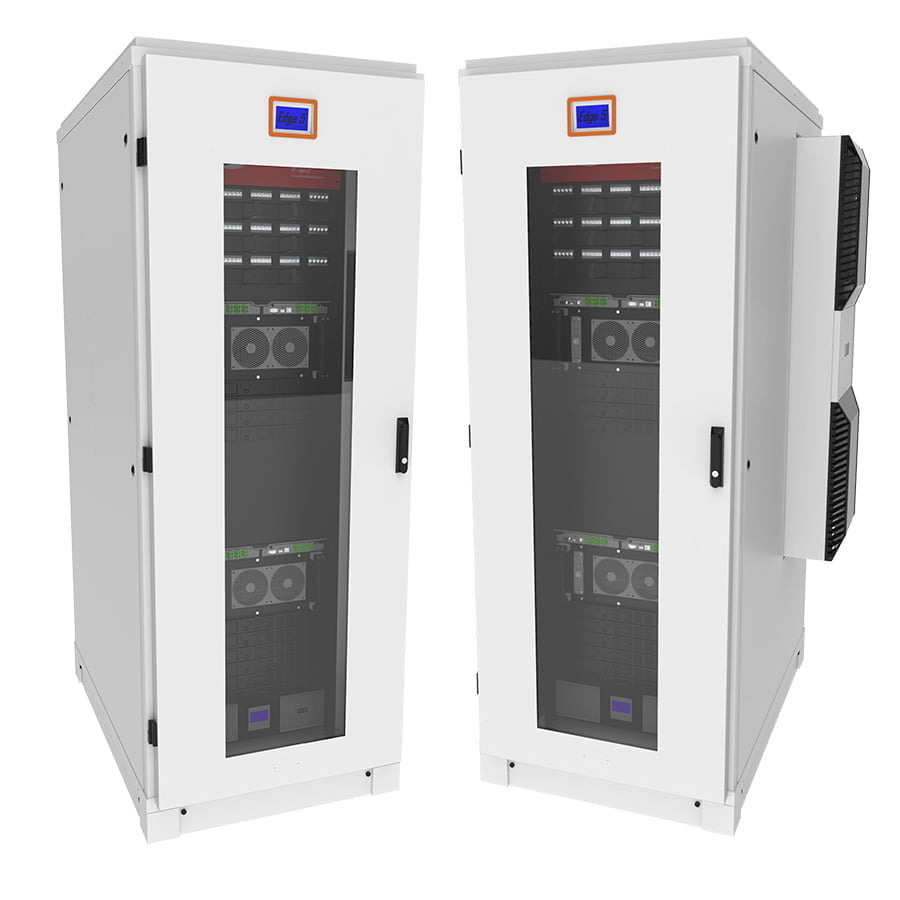
EDP Distribution provides a variety of 19″ cabinets. This allows us to offer 19″ racking solutions for data centres, enterprise IT, computer rooms, and offices.
 Manufacturers create a server rack as a standard frame or enclosure. It holds different types of electronic IT equipment. Particularly servers, networking devices, and other essential IT hardware.
The Electronic Industries Alliance (EIA-310) set the standard for the width between mounting rails. They design racks to fit equipment that is 19 or 23 inches wide. This uniformity allows users to mix and match equipment from different vendors, knowing the rack structure will physically fit the equipment.
Technicians attach equipment to the rack’s vertical rails. They use screws or clip-in fasteners, usually at the front. They often add extra support at the back for heavier devices.
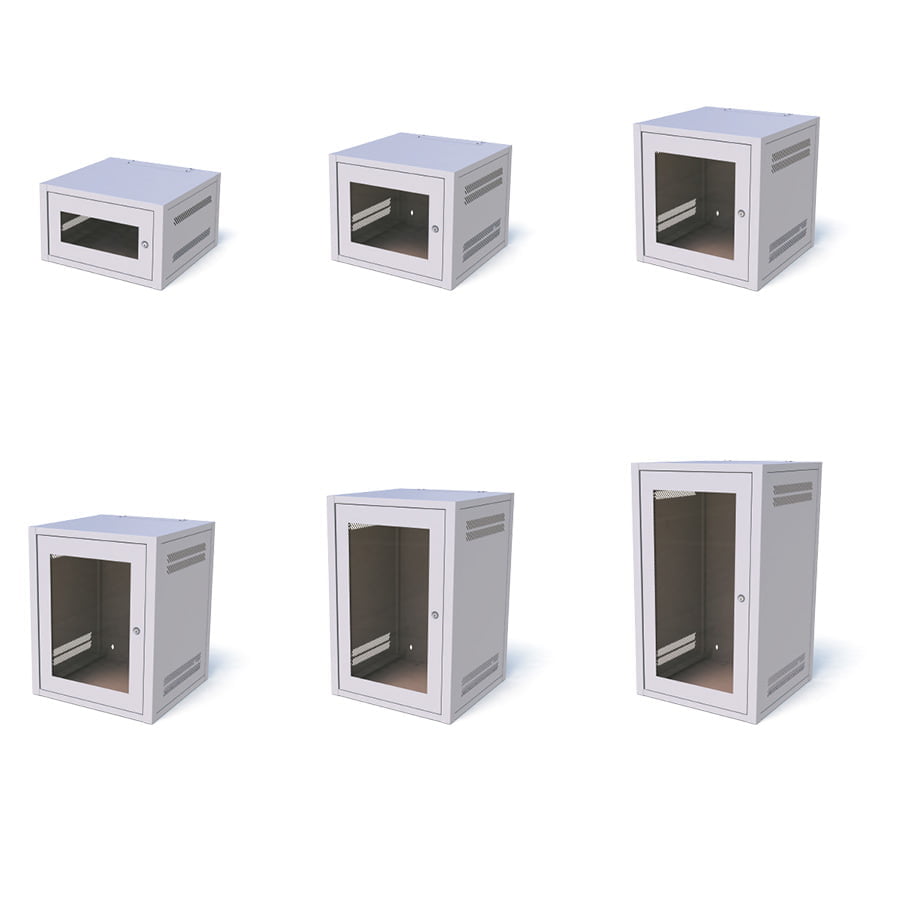
Manufacturers measure the height of a 19″ cabinet or rack in “rack units” (U), where 1U equals 1.75 inches (44.45 mm). A standard full-size rack is usually 42U tall. This means it is about 73.5 inches (1867 mm) high.
However, users may find shorter or taller racks. This depends on their space needs and the amount of equipment.
There are various forms of server racks. Open-frame racks allow easy access and good airflow. However, they do not provide physical security or dust protection. This makes them better for secure server rooms or lab environments.
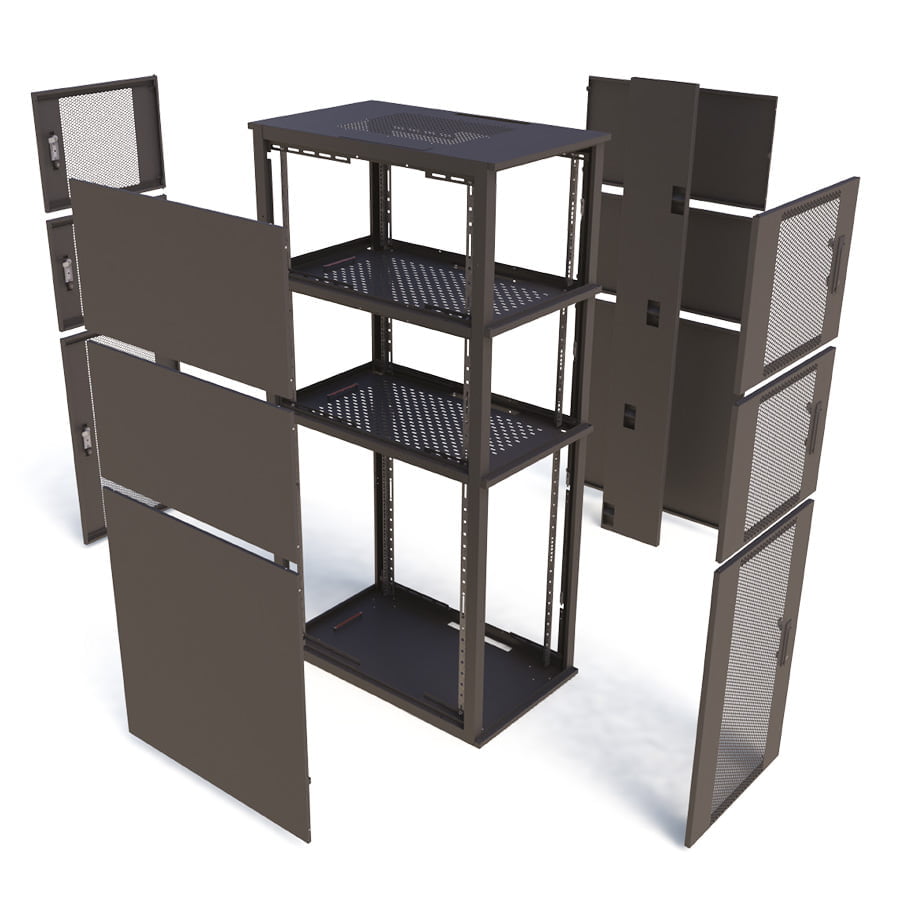
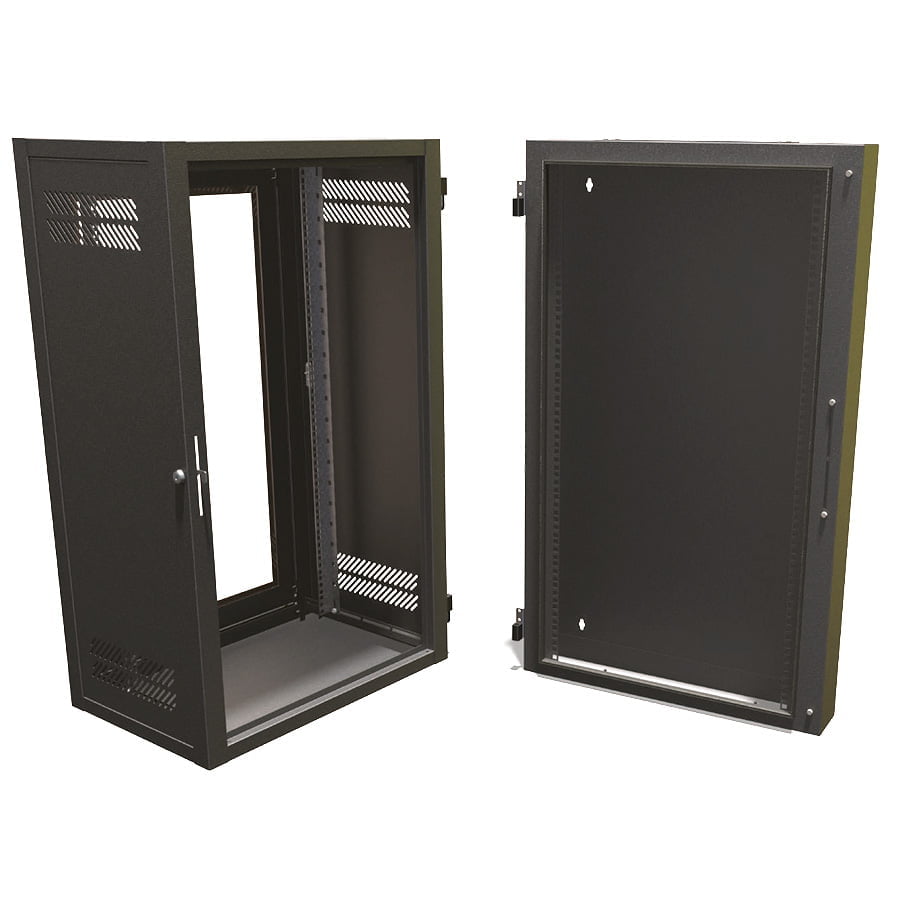
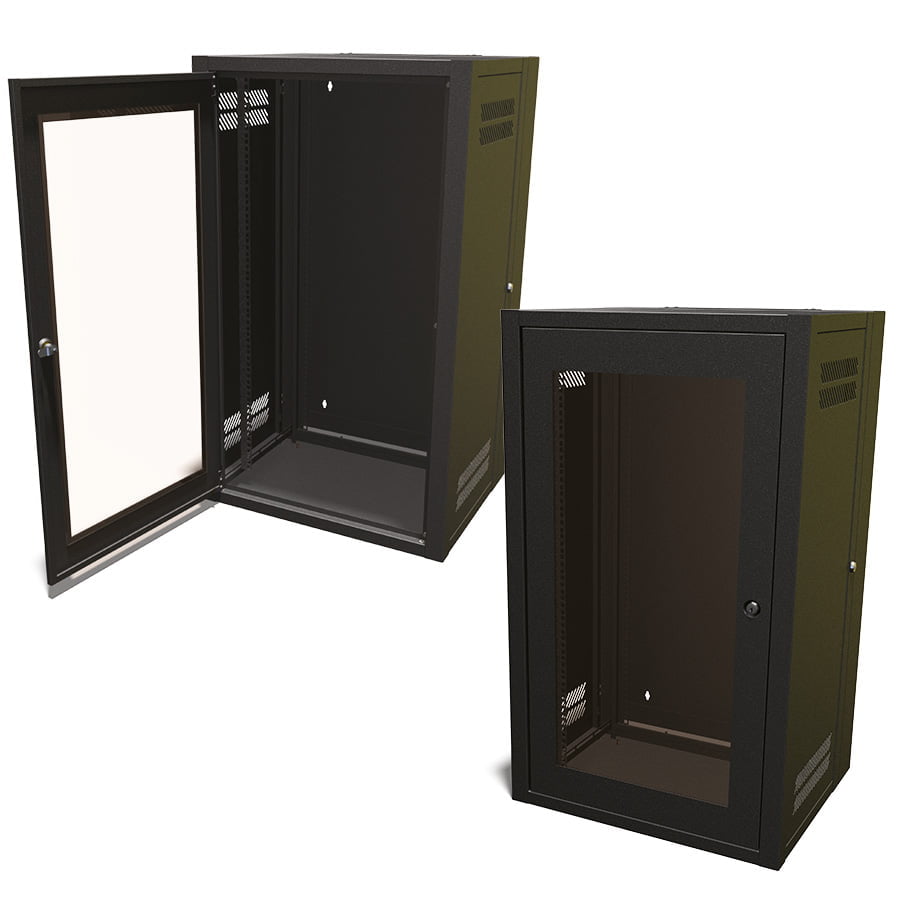
Conversely, manufacturers design enclosed 19″ cabinet designs with front and rear doors, along with side panels. These enclosures come in many types. Some have solid doors for security. Others have perforated doors for better airflow. There are also special sealed units for places that need protection from dust and water. The depth of these cabinets also varies significantly, accommodating everything from shallow network switches to deep, high-performance servers.
Manufacturers construct the racks typically using robust steel or aluminium materials to bear substantial weight. Users look for features like adjustable mounting rails to accommodate diverse equipment depths, integrated cable management pathways, and provisions for Power Distribution Units (PDUs) that technicians can mount directly within the rack itself. The server rack transforms a collection of disparate IT components into an organised, manageable, and protected system.
Modern data centres fundamentally rely on 19″ racks to ensure efficiency, security, and scalability. These racks offer critical advantages:
- Optimised Space Utilisation: They maximise floor space by allowing vertical stacking of equipment, enabling efficient management.
- Superior Cable Management: They organise cables with built-in features like pathways and trays. This improves airflow, makes troubleshooting easier, and reduces hazards.
- Improved Physical Security: They limit unauthorised access with lockable cabinet doors and panels. This protects valuable IT assets from theft or damage. Organisations can further enhance security by adding a rack access control system.
- Critical for Cooling and Airflow: They help cool systems by using perforated doors. These doors let a certain amount of air flow through. This ensures cool air reaches server intakes while hot exhaust air is pushed out effectively. This is especially vital when used with Aisle Containment Systems.
- Simplified Power Distribution: They simplify power distribution by integrating PDUs directly into racks, offering efficient, reliable power delivery and advanced monitoring.
- Protection from Environmental Factors: They shield sensitive electronics from dust, debris, and humidity through enclosed cabinets.
- Scalability and Maintenance: Their modular design simplifies the processes of expanding, reconfiguring, and maintaining IT infrastructure.
Server racks provide a structured space for IT equipment. This helps the equipment work reliably, securely, and efficiently. They support the high-density computing and constant operation that our digital infrastructure needs.
When choosing the right 19″ cabinet, you need to think carefully. It affects the performance, lifespan, and future growth of your IT setup.
Keep these key factors in mind:
- Size & Dimensions: Find the U-height needed for current and future IT equipment. Make sure there is enough depth, like 1000-1200mm for modern servers. Also, think about the external width for space limits.
- Weight Capacity: Verify the static and dynamic load capacities for all equipment, including potential future additions.
- Cooling and Airflow: Use doors with many perforated holes (70-80%) and think about active cooling for dense setups. This helps improve cooling and airflow.
- Cable Management: Prioritise features like channels and tie-down points for efficient cable routing, improved airflow, and easier maintenance.
- Security: Make sure the doors and side panels are strong and can be locked. Consider adding advanced access control for better security.
- Accessibility & Maintenance: Look for removable panels and adjustable rails to simplify installation and servicing.
- Power Integration: Confirm resolute PDU mounting options for efficient power distribution.
- Environmental Protection: Consider specialised IP-rated or seismic-braced racks for demanding environments to provide environmental protection.
Sometimes you will need more specialised racks that offer enhanced features, such as:
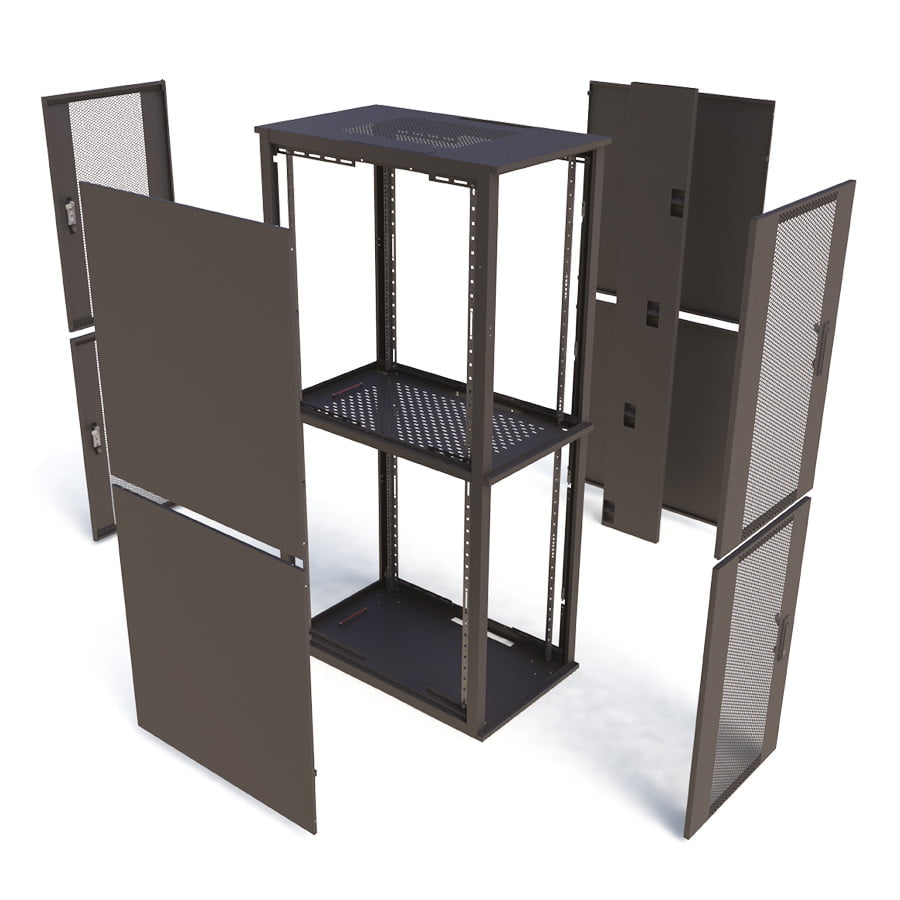
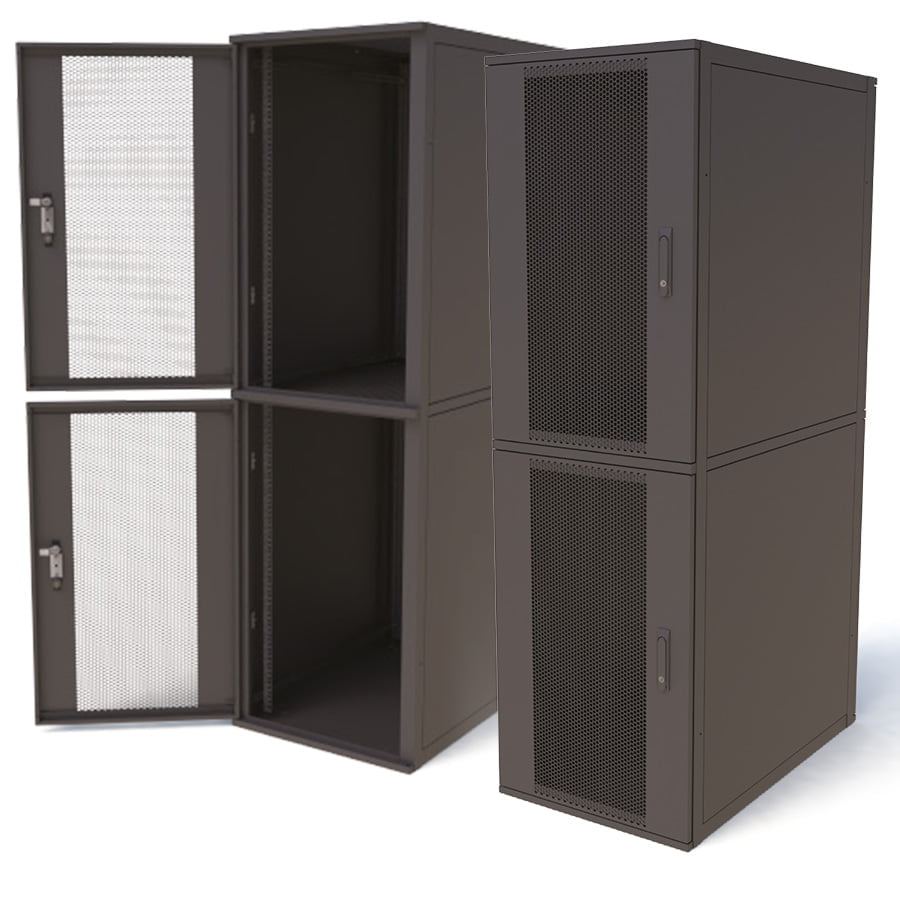
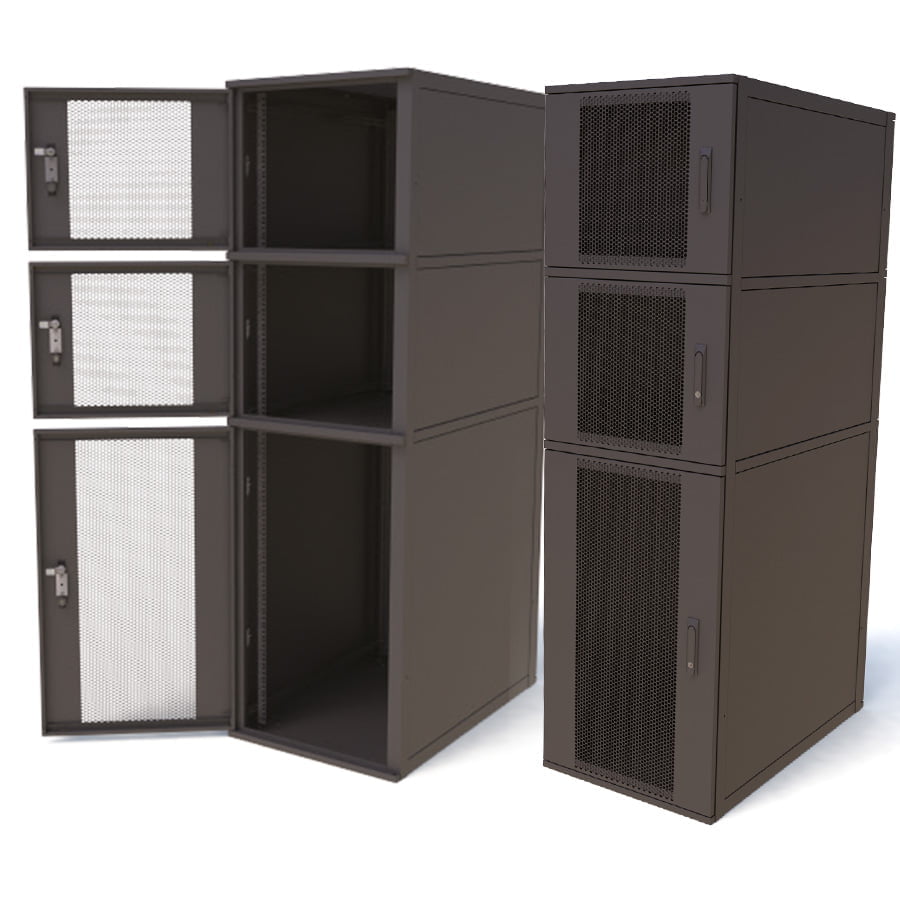
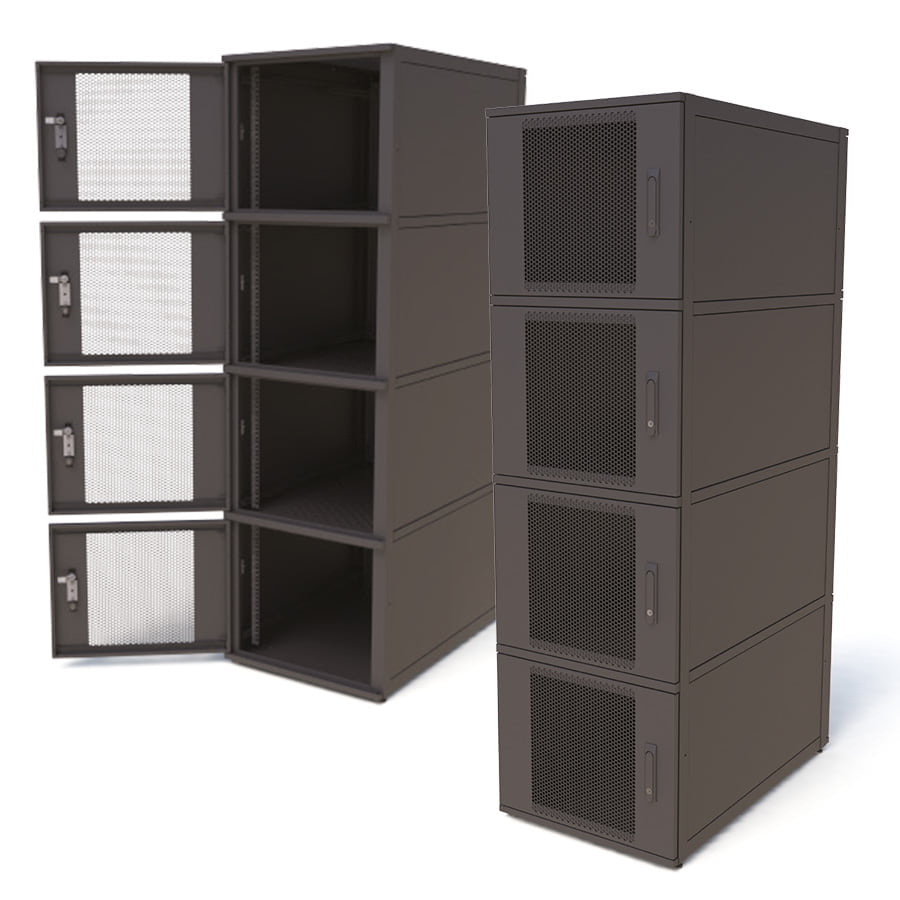
- Colocation racks have separate compartments in one rack. This design provides better security and isolation for multi-tenant data centres. They often include individual power metering.
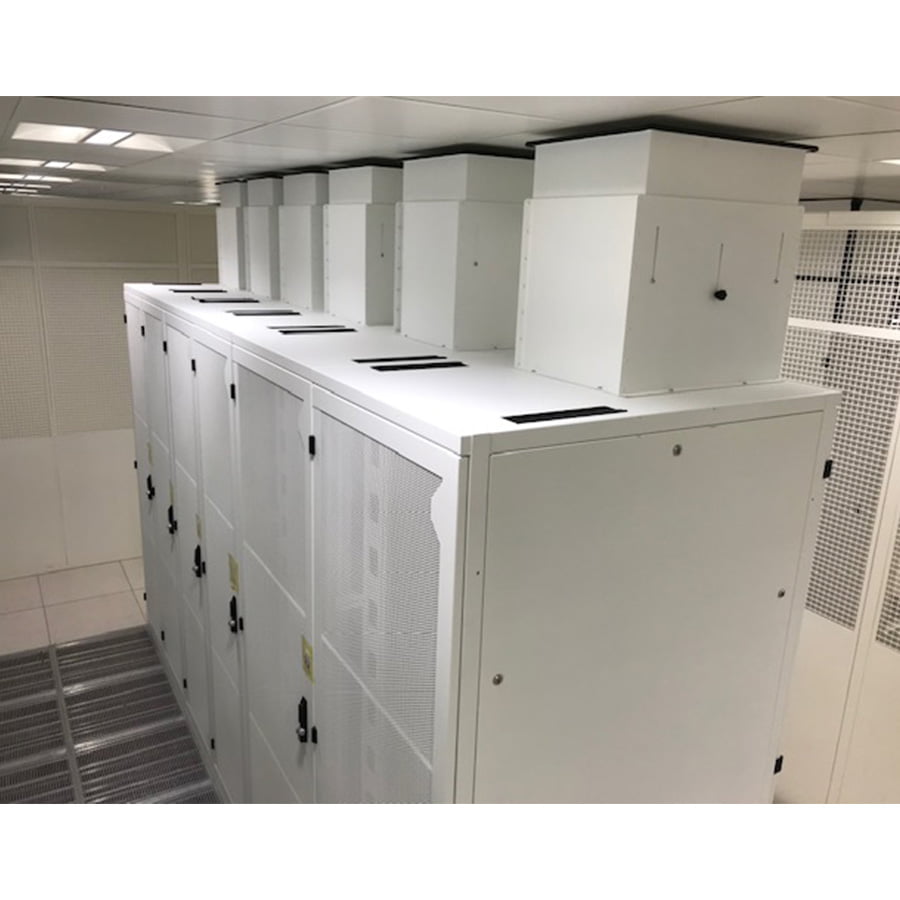
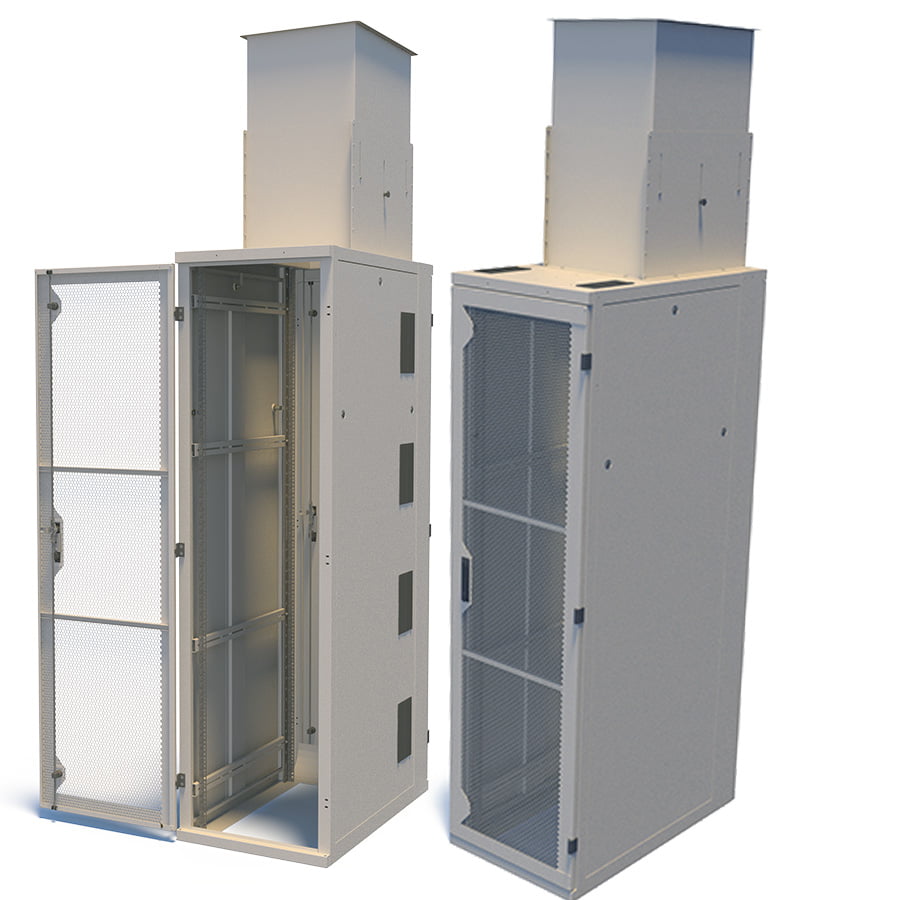
- Chimney racks are made to catch hot air from the back of servers. They send this air straight up through a built-in “chimney” system. This system connects to an overhead plenum or a special exhaust duct.
- Water-cooled racks use liquid cooling for very high-density setups, like supercomputing and AI/ML. They help remove a lot of heat and save energy.
- Acoustic racks, incorporating sound-dampening materials for quieter operation in office environments.
Read more about server racks. Alternately, watch our short video.